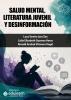
Salud Mental, Literatura Juvenil y Desinformación
Palabras clave:
Salud mental, Literatura juvenil, Trastornos mentales, Desinformación, Ficción narrativaSinopsis
Hay una pregunta que me ha perseguido durante años, mucho antes de que este libro tuviera nombre. Es una pregunta que nació en la intersección de dos experiencias que no deberían haberse cruzado pero que, para mí, fueron inseparables: la experiencia de vivir con un trastorno mental y la experiencia de leer ficción sobre trastornos mentales. Cuando yo estaba hospitalizada, cuando la realidad y la fantasía se trenzaban de formas que solo quien ha estado ahí puede comprender, leía novelas. Leía novelas que hablaban de personas como yo. Y lo que encontraba, con demasiada frecuencia, no me representaba. Me distorsionaba.
La pregunta es esta: ¿qué sucede cuando millones de adolescentes leen ficción sobre depresión, ansiedad, trastorno bipolar, psicosis, suicidio, y lo que leen no es preciso?
No hablo de ficción mala. Hablo de ficción premiada, recomendada, viral. Hablo de novelas que sus autores escribieron con buenas intenciones y que sus editores publicaron creyendo que contribuían a la visibilización. Hablo de libros que, sin quererlo, transmiten información clínicamente incorrecta a lectores cuya principal fuente de conocimiento sobre salud mental no es un profesional, sino una historia.
Este libro nació de esa pregunta. Y nació, también, de una convicción: la ficción no es el enemigo. La ficción es uno de los instrumentos más poderosos que tenemos para comprender la experiencia humana. Pero precisamente porque es poderosa, debe ser responsable. No pedimos que los novelistas se conviertan en psiquiatras. Pedimos que investiguen antes de escribir. Que los editores verifiquen antes de publicar. Que los docentes acompañen antes de asignar.
El Capítulo 1 establece el marco: qué es la salud mental según la ciencia, no según la ficción. El Capítulo 2 examina cómo la ficción convierte los trastornos mentales en recursos narrativos, identificando estereotipos que aparecen incluso en novelas aclamadas. El Capítulo 3 entra en territorio técnico: los psicofármacos en la ficción, donde los errores no son solo estéticos sino farmacológicamente peligrosos. El Capítulo 4 analiza el ecosistema digital —Wattpad, BookTok, redes sociales— que amplifica estas narrativas sin filtro profesional. El Capítulo 5 propone lineamientos concretos para autores, editores y mediadores de lectura.
Cada capítulo incluye análisis de obras reales, cuadros comparativos entre lo que la ficción dice y lo que la ciencia sabe, glosarios, actividades y preguntas de evaluación. Cada afirmación clínica o farmacológica está respaldada por fuentes verificadas con DOI. Hemos intentado que el rigor científico no sacrifique la accesibilidad, y que la accesibilidad no sacrifique la precisión.
Escribir este libro ha sido un acto de equilibrio constante. He tenido que analizar con distancia crítica experiencias que he vivido desde dentro. He tenido que señalar errores en novelas que, en otro momento de mi vida, me ayudaron a sentirme menos sola. He tenido que aceptar que la ficción que me conmovió como lectora me preocupa como analista. Esa tensión no se resuelve: se habita. Y habitarla con honestidad es, quizá, la mayor contribución que este libro puede ofrecer.
Quiero agradecer a Ronald Andreé Vitonera Rogel, coautor de esta obra, cuyo rigor científico y conocimiento farmacológico han sido el contrapeso necesario para que mi experiencia vivida no derivara hacia lo anecdótico. A la Universidad Internacional de La Rioja (UNIR), donde mi formación en Técnicas Narrativas me dio las herramientas para analizar lo que antes solo sentía. Y a cada lector que abre este libro con la disposición de cuestionar lo que ha leído sobre salud mental en la ficción: este libro es para ustedes.
Referencias
American Psychiatric Association. (2022). Diagnostic and statistical manual of mental disorders (5th ed., text rev.). APA Publishing. https://doi.org/10.1176/appi.books.9780890425787
Anderson, L. H. (2009). Wintergirls. Viking.
Aringhieri, S., Kolachalam, S., Sardella, A., Ferraris Fusarini, C., Fico, G., & Bhatt, S. (2020). Mechanism of action of atypical antipsychotic drugs in mood disorders. International Journal of Molecular Sciences, 21(24), 9532. https://doi.org/10.3390/ijms21249532
Asher, J. (2007). Thirteen reasons why. Razorbill.
Bridge, J. A., Greenhouse, J. B., Ruch, D., Stevens, J., Ackerman, J., Sheftall, A. H., Horowitz, L. M., Kelleher, K. J., & Campo, J. V. (2020). Association between the release of Netflix's 13 Reasons Why and suicide rates in the United States: An interrupted time series analysis. Journal of the American Academy of Child & Adolescent Psychiatry, 59(2), 236-243. https://doi.org/10.1016/j.jaac.2019.04.020
Bschor, T., Kern, H., Henssler, J., & Baethge, C. (2022). The complex clinical response to selective serotonin reuptake inhibitors in depression: A network perspective. Translational Psychiatry, 13, 19. https://doi.org/10.1038/s41398-022-02285-2
Caraci, F., Catanzaro, S., Guillemain, A., Mekhaeil, M., & Copani, A. (2022). Present and future antipsychotic drugs: A systematic review of their pharmacological properties. Pharmacological Research, 176, 106078. https://doi.org/10.1016/j.phrs.2022.106078
Chbosky, S. (1999). The perks of being a wallflower. Pocket Books.
Competiello, S. K., Bizer, G. Y., & Walker, D. C. (2023). The power of social media: Stigmatizing content affects perceptions of mental health care. Social Media + Society, 9(4). https://doi.org/10.1177/20563051231207847
Correll, C. U., & Schooler, N. R. (2020). Negative symptoms in schizophrenia: A review and clinical guide for recognition, assessment, and treatment. Neuropsychiatric Disease and Treatment, 16, 519-534. https://doi.org/10.2147/NDT.S225643
De Melo, A. (2024). The influence of BookTok on literary criticisms and diversity. Social Media + Society, 10(4). https://doi.org/10.1177/20563051241286700
Dera, J. (2024). BookTok: A narrative review of current literature and directions for future research. Literature Compass, 21(11-12), e70012. https://doi.org/10.1111/lic3.70012
Dera, J., Brouwer, J., & Welling, L. (2023). #BookTok's appeal on ninth-grade students: An inquiry into students' responses on a social media revelation. Journal of Adolescent & Adult Literacy, 67(2), 90-99. https://doi.org/10.1002/jaal.1303
Dezuanni, M., Reddan, G., Rutherford, L., & Schoonels, H. (2022). Selfies and shelfies on #Bookstagram and #BookTok: Mediation practices for reading. Learning, Media and Technology, 48(3), 458-472. https://doi.org/10.1080/17439884.2022.2068575
Edinoff, A. N., Nix, C. A., Hollier, J., et al. (2021). Benzodiazepines: Uses, dangers, and clinical considerations. Neurology International, 13(4), 594-607.
https://doi.org/10.3390/neurolint13040059
Elman, J. P. (2012). «Nothing feels as real»: Teen sick-lit, sadness, and the condition of adolescence. Journal of Literary and Cultural Disability Studies, 6(2), 175-191. https://doi.org/10.1353/jlc.2012.0011
Foster, A., & Ellis, N. (2024). TikTok-inspired self-diagnosis and its implications for educational psychology practice. Educational Psychology in Practice, 40(4), 491-508.
https://doi.org/10.1080/02667363.2024.2409451
Frank, A. W. (2013). The wounded storyteller: Body, illness, and ethics (2nd ed.). University of Chicago Press.
Green, J. (2017). Turtles all the way down. Dutton Books.
Grosselli, L., et al. (2025). When knowledge falls short: A systematic review on the correlation of mental health knowledge with stigma and help-seeking. Mental Health Science, 3(1), e70022. https://doi.org/10.1002/mhs2.70022
Haidt, J. (2024). The anxious generation: How the great rewiring of childhood is causing an epidemic of mental illness. Penguin Press. ISBN: 978-0593655030.
Hawkins, A. H. (1999). Reconstructing illness: Studies in pathography (2nd ed.). Purdue University Press.
Jara Zea, L. (2023). Terapia electroconvulsiva. Editorial Aletrion. ISBN: 978-9942-635-01-3.
Kaysen, S. (1993). Girl, interrupted. Turtle Bay Books.
Kurt, M. (2024). Adolescent usage of Wattpad: Reading habit or digital addiction? Psychology in the Schools, 61(4), 1423-1440. https://doi.org/10.1002/pits.23518
Maddox, J., & Gill, F. (2023). Assembling «sides» of TikTok: A BookTok case study. Social Media + Society, 9(4). https://doi.org/10.1177/20563051231213565
Mittmann, G., Schrank, B., & Steiner-Hofbauer, V. (2024). A scoping review about the portrayal of depression and anxiety in mainstream and social media. International Journal of Psychology, 59(6), 1197-1208. https://doi.org/10.1002/ijop.13232
Monroy-Fraustro, D., Maldonado-Castellanos, I., Aboites-Molina, M., Rodriguez, S., Sueiras, P., Altamirano-Bustamante, N. F., de Hoyos-Bermea, A., & Altamirano-Bustamante, M. M. (2021). Bibliotherapy as a non-pharmaceutical intervention to enhance mental health in response to the COVID-19 pandemic: A mixed-methods systematic review and bioethical meta-analysis. Frontiers in Public Health, 9, 629872. https://doi.org/10.3389/fpubh.2021.629872
Moses, T. (2010). Stigma experience among adolescents taking psychiatric medication. Child and Adolescent Social Work Journal, 28, 7-31. https://doi.org/10.1007/s10560-010-0218-7
Niederkrotenthaler, T., Stack, S., Till, B., Sinyor, M., Pirkis, J., Garcia, D., Rockett, I. R. H., & Tran, U. S. (2019). Association of increased youth suicides in the United States with the release of 13 Reasons Why. JAMA Psychiatry, 76(9), 933-940.
https://doi.org/10.1001/jamapsychiatry.2019.0922
Niederkrotenthaler, T., Voracek, M., Engel, L., Till, B., Gould, M., Pirkis, J., & Sinyor, M. (2022). Effects of media stories of hope and recovery on suicidal ideation and help-seeking attitudes and intentions: Systematic review and meta-analysis. The Lancet Public Health, 7(2), e156-e168. https://doi.org/10.1016/S2468-2667(21)00274-7
Niven, J. (2015). All the bright places. Knopf.
Orben, A., & Przybylski, A. K. (2019). The association between adolescent well-being and digital technology use. Nature Human Behaviour, 3(2), 173-182. https://doi.org/10.1038/s41562-018-0506-1
Organización Mundial de la Salud. (2023). Preventing suicide: A resource for media professionals, update 2023. OMS. https://www.who.int/publications/i/item/9789240076846
Pianzola, F., Rebora, S., & Lauer, G. (2020). Wattpad as a resource for literary studies: Quantitative and qualitative examples of the importance of digital social reading platforms. PLoS ONE, 15(1), e0226708. https://doi.org/10.1371/journal.pone.0226708
Pirkis, J., Rossetto, A., Nicholas, A., Ftanou, M., Robinson, J., & Reavley, N. (2020). Media guidelines and suicide: A critical review. Social Science & Medicine, 244, 112690. https://doi.org/10.1016/j.socscimed.2019.112690
Plath, S. (1963). The bell jar. Heinemann.
Popat, A., & Tarrant, C. (2023). Exploring adolescents' perspectives on social media and mental health and well-being: A qualitative literature review. Clinical Child Psychology and Psychiatry, 28(1), 323-337. https://doi.org/10.1177/13591045221092884
Qiao, S., Teranishi Martinez, M., & Li, X. (2023). How adolescents trust health information on social media: A systematic review. Academic Pediatrics, 23(4), 703-715. https://doi.org/10.1016/j.acap.2022.12.011
Reed, G. M., First, M. B., Kogan, C. S., Hyman, S. E., Gureje, O., Gaebel, W., Maj, M., Stein, D. J., Maercker, A., Tyrer, P., & Saxena, S. (2019). Innovations and changes in the ICD-11 classification of mental, behavioural and neurodevelopmental disorders. World Psychiatry, 18(1), 3-19. https://doi.org/10.1002/wps.20611
Robinson, E. J., Henderson, C., & Thornicroft, G. (2019). A systematic review of the impact of media reports of severe mental illness on stigma and discrimination. Social Psychiatry and Psychiatric Epidemiology, 54(1), 11-31. https://doi.org/10.1007/s00127-018-1608-9
Sadock, B. J., Sadock, V. A., & Ruiz, P. (2015). Kaplan & Sadock's synopsis of psychiatry: Behavioral sciences/clinical psychiatry (11th ed.). Wolters Kluwer.
Scalvini, M. (2020). 13 Reasons Why: Can a TV show about suicide be «dangerous»? What are the moral obligations of a producer? Media, Culture & Society, 42(7-8), 1564-1574. https://doi.org/10.1177/0163443720932502
Seedaket, S., Thawornchan, J., Anukunwathaka, T., Kasatpibal, N., & Techato, K. (2020). Improving mental health literacy in adolescents: Systematic review of supporting intervention studies. Tropical Medicine & International Health, 25(9), 1055-1064. https://doi.org/10.1111/tmi.13449
Shusterman, N. (2015). Challenger deep. HarperTeen.
Smith, L. J., McDougall, A., & Sheridan, J. (2024). The impact of school-based creative bibliotherapy interventions on child and adolescent mental health and well-being: A systematic review. Systematic Reviews, 13(1), 83. https://doi.org/10.1186/s13643-024-02482-8
Sontag, S. (1978). Illness as metaphor. Farrar, Straus and Giroux.
Stahl, S. M. (2021). Stahl's essential psychopharmacology: Neuroscientific basis and practical applications (5th ed.). Cambridge University Press. https://doi.org/10.1017/9781108975292
Stone, T. I. (2015). Every last word. Hyperion.
Strawn, J. R., Mills, J. A., Sauley, B. A., & Welge, J. A. (2020). The impact of antidepressant dose and class on treatment response in pediatric anxiety disorders: A meta-analysis. Frontiers in Psychiatry, 11, 717. https://doi.org/10.3389/fpsyt.2020.00717
Stuart, H. (2006). Media portrayal of mental illness and its treatments: What effect does it have on people with mental illness? CNS Drugs, 20(2), 99-106. https://doi.org/10.2165/00023210-200620020-00002
Tam, M. T., Wu, J. M., Zhang, C. C., Pawliuk, C., & Robillard, J. M. (2024). A systematic review of the impacts of media mental health awareness campaigns on young people. Health Promotion Practice, 25(4), 619-635. https://doi.org/10.1177/15248399241232646
Twenge, J. M., Haidt, J., Lozano, J., & Cummins, K. M. (2022). Specification curve analysis shows that social media use is linked to poor mental health, especially among girls. Acta Psychologica, 224, 103512. https://doi.org/10.1016/j.actpsy.2022.103512
Van den Berg, E., et al. (2022). Efficacy and safety of SSRIs and SNRIs for children and adolescents with anxiety disorders: A systematic review and meta-analysis. Nordic Journal of Psychiatry, 77(2), 139-146. https://doi.org/10.1080/08039488.2022.2075460
Van Hoeken, D., & Hoek, H. W. (2020). Review of the burden of eating disorders: Mortality, disability, costs, quality of life, and family burden. Current Opinion in Psychiatry, 33(6), 521-527. https://doi.org/10.1097/YCO.0000000000000641
Vizzini, N. (2006). It's kind of a funny story. Hyperion.
Wang, H., Cummins, I., & Seko, Y. (2024). Editorial: The representation of psychiatry and mental health in popular culture. Frontiers in Psychiatry, 15, 1432346.
https://doi.org/10.3389/fpsyt.2024.1432346
Whaley, J. C. (2016). Highly illogical behavior. Dial Books.
Wurtzel, E. (1994). Prozac nation. Houghton Mifflin.
Yao, Y., Liu, J., & Ye, J. (2024). The efficacy of bibliotherapy in depression management: A systematic review of randomized clinical trials. Current Psychiatry Research and Reviews, 20(3), 245-258. https://doi.org/10.2174/0126660822317882240719053530
Zalsman, G., Hawton, K., Wasserman, D., van Heeringen, K., Ziv, A., Zohar, J., & Carli, V. (2016). Suicide prevention strategies revisited: 10-year systematic review. The Lancet Psychiatry, 3(7), 646-659. https://doi.org/10.1016/S2215-0366(16)30030-X
Descargas
Publicado
mayo 20, 2026
Derechos de autor 2026 EduLearn Academy SAS
Detalles sobre esta monografía
ISBN-13 (15)
978-9907-9539-9-2
Cómo citar
Jara Zea, L. Y., Guzman Heras, L. E., & Vitonera Rogel, R. A. (Eds.). (2026). Salud Mental, Literatura Juvenil y Desinformación. EduLearn Academy SAS. https://doi.org/10.64973/edu.2026.2541